The BELL+HOWELL Portable Light Bar is designed to stay plugged in as a backup, then turn on automatically when household power fails.
This BELL+HOWELL Portable Light Bar review looks at its outage sensor, two brightness modes, and portable setup to help you decide whether its dry-condition design fits your needs.
Portable Light Bar Review Summary
The quick verdict
3,000+ ratings
Read Amazon ReviewsBELL+HOWELL Portable Light Bar
A cordless, rechargeable backup light for households and campers who want an automatic light during power outages.
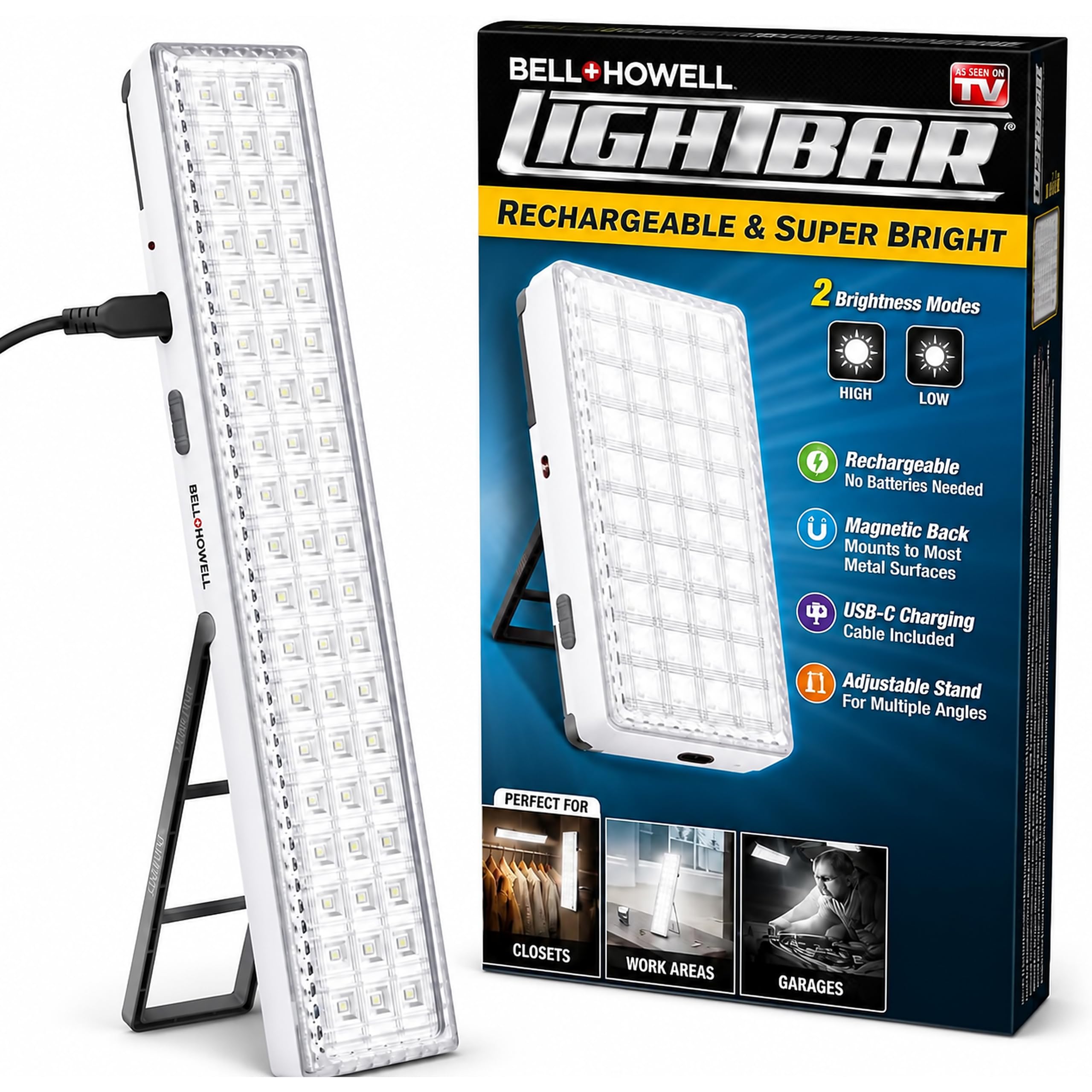
- A 16.5-inch cordless bar with 60 built-in LEDs.
- Up to 720 lumens on the higher brightness mode, with a lower mode for softer light and longer battery use.
- An automatic outage sensor that turns on the light when power fails while the bar is plugged in and the sensor is active.
- A rechargeable battery, an included AC charging adapter, and a recommended initial charge of about 24 hours.

Pros
- The outage sensor can provide light automatically when the bar is plugged in and set up with the sensor active.
- Two brightness settings offer a choice between stronger illumination and a lower mode designed to stretch battery use.
Consider before buying
- It is not waterproof, which limits use to dry conditions outdoors.
- The automatic outage function depends on keeping it plugged in with the sensor active.
Read the full review summary
This 16.5-inch rechargeable light bar combines 60 LEDs with an outage sensor that can switch the light on when power is cut, provided it is plugged in with the sensor active.
That hands-off role is its clearest draw: it can be kept in a utility area or living space as a ready source of light, rather than stored away like a flashlight.
The fold-out stand and hanger give it several placement options, while two brightness modes let you choose brighter illumination or a lower setting intended to extend battery use.
It suits households seeking a stationary outage backup that can also move to a garage, tent, or workbench. Because it is not waterproof, outdoor use should be limited to dry conditions.
The buying factors
Portable Light Bar Scorecard
Editorial scores reflect listed features and buyer fit; they are not laboratory measurements or customer ratings.
Outage readiness
The automatic sensor is useful for a backup light kept plugged in with the sensor active.
Placement flexibility
A fold-out stand and hanger support tabletop or suspended placement.
Brightness options
Two modes provide a brighter option and a lower setting for softer light and longer battery use.
Portability
Its cordless rechargeable design can move between indoor spaces and dry campsite use.
Ease of controls
A push-button control keeps operation straightforward.
Weather flexibility
The light is not waterproof, so it is unsuitable for wet or exposed conditions.
Key Features and Specifications of Portable Light Bar
- A 16.5-inch cordless bar with 60 built-in LEDs.
- Up to 720 lumens on the higher brightness mode, with a lower mode for softer light and longer battery use.
- An automatic outage sensor that turns on the light when power fails while the bar is plugged in and the sensor is active.
- A rechargeable battery, an included AC charging adapter, and a recommended initial charge of about 24 hours.
- A fold-out stand, a hanger, and a push-button control.
- Intended for indoor spaces and dry outdoor settings; it is not waterproof.
Pros and Cons of Portable Light Bar
Pros
- The outage sensor can provide light automatically when the bar is plugged in and set up with the sensor active.
- Two brightness settings offer a choice between stronger illumination and a lower mode designed to stretch battery use.
- The stand and hanger make it adaptable to a table, shelf, or suitable hook.
- Rechargeable cordless operation supports use away from an outlet after charging.
Consider before buying
- It is not waterproof, which limits use to dry conditions outdoors.
- The automatic outage function depends on keeping it plugged in with the sensor active.
- The recommended first charge takes about 24 hours, and stored units need recharging every few months.
- Runtime varies by brightness mode, with the higher setting using the battery faster.
Who Should Buy Portable Light Bar?
Good fit
Consider it if you want a backup light that can stay plugged in and switch on automatically during a household outage.
The sensor is most useful when the light has a practical, accessible place where it can remain connected and ready.
It also makes sense for someone who wants one rechargeable light for several dry settings.
The stand and hanger let you place it on a work surface or hang it where needed, and the lower brightness mode may help conserve battery when maximum output is unnecessary.
Who should skip it
Skip it if the light must withstand rain, splashes, or damp storage. Its design is not waterproof, so it is better suited to protected indoor spaces or dry outdoor use.
It may not suit you if you need a light that is always ready without remaining plugged in, or if you need a fixed runtime expectation.
The automatic outage feature relies on a plugged-in setup, and runtime depends on the selected mode.
How the Portable Light Bar Fits an Outage Plan
Automatic light for a fixed backup spot
The outage sensor shapes how this light is best used.
Keep it plugged into an outlet in a room or utility area where illumination would help, with the sensor active; that setup allows it to turn on when household power cuts out.
It is less suited to a backup routine where the light is stored unplugged and moved only after an outage begins.
Choosing a brightness mode
The higher mode reaches up to 720 lumens, while the lower mode is described as softer and more battery-conscious.
That gives you a simple choice based on the task: use the brighter setting when you need more visibility, and consider the lower one when you want to conserve charge. Actual runtime depends on the chosen mode.
Moving it around
A fold-out stand and hanger provide two straightforward ways to position the bar without a permanent installation.
It can sit on a table or shelf, or hang from a suitable hook, which helps it serve different indoor utility spaces and dry settings such as a tent or RV.
Before relying on it in a particular spot, check that the surface or hook supports the way you plan to place it.
Charging and storage habits
The included AC adapter is used to charge the rechargeable light, and the recommended first charge is about 24 hours.
If you keep one in storage for emergencies, recharge it every few months as directed so it is less likely to be depleted when needed.
The higher mode drains the battery faster, so choosing the lower setting when appropriate can help preserve charge.
Alternatives to Portable Light Bar
No alternative model is recommended here. Compare the placement, charging, and weather requirements that matter to your routine before choosing another option.
Is Portable Light Bar Worth It?
The BELL+HOWELL Portable Light Bar is worth considering as a rechargeable household backup if you value an automatic light during an outage and can keep it plugged in with its sensor active.
Its stand, hanger, and two brightness modes add useful flexibility for moving it between dry locations.
The main tradeoffs are its dependence on a plugged-in setup for automatic activation, variable battery runtime, and lack of waterproofing.
Choose it for protected household use and occasional dry outings; look for a weather-rated option if wet conditions are part of the plan.
Your review at a glance
3,000+ ratings
Read Amazon ReviewsBELL+HOWELL Portable Light Bar
A cordless, rechargeable backup light for households and campers who want an automatic light during power outages.
- A 16.5-inch cordless bar with 60 built-in LEDs.
- Up to 720 lumens on the higher brightness mode, with a lower mode for softer light and longer battery use.
- An automatic outage sensor that turns on the light when power fails while the bar is plugged in and the sensor is active.
- A rechargeable battery, an included AC charging adapter, and a recommended initial charge of about 24 hours.